
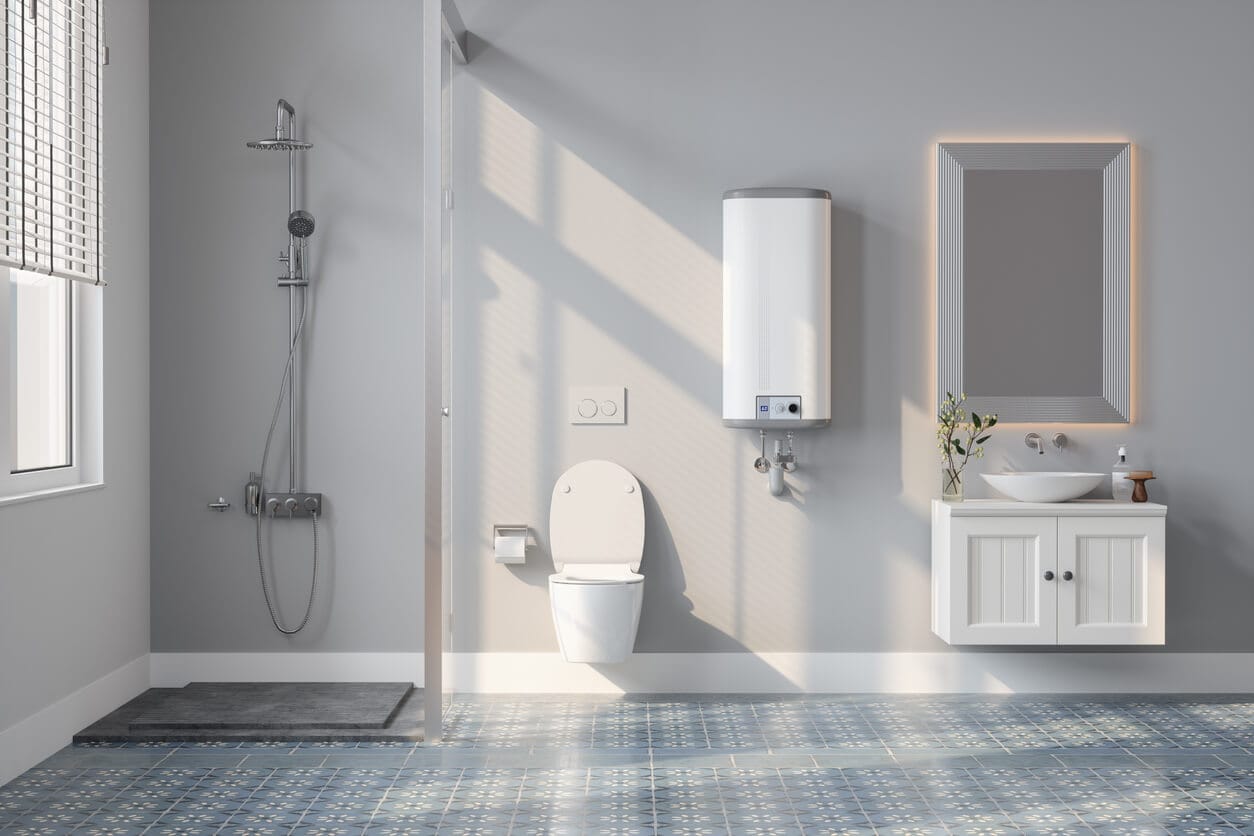
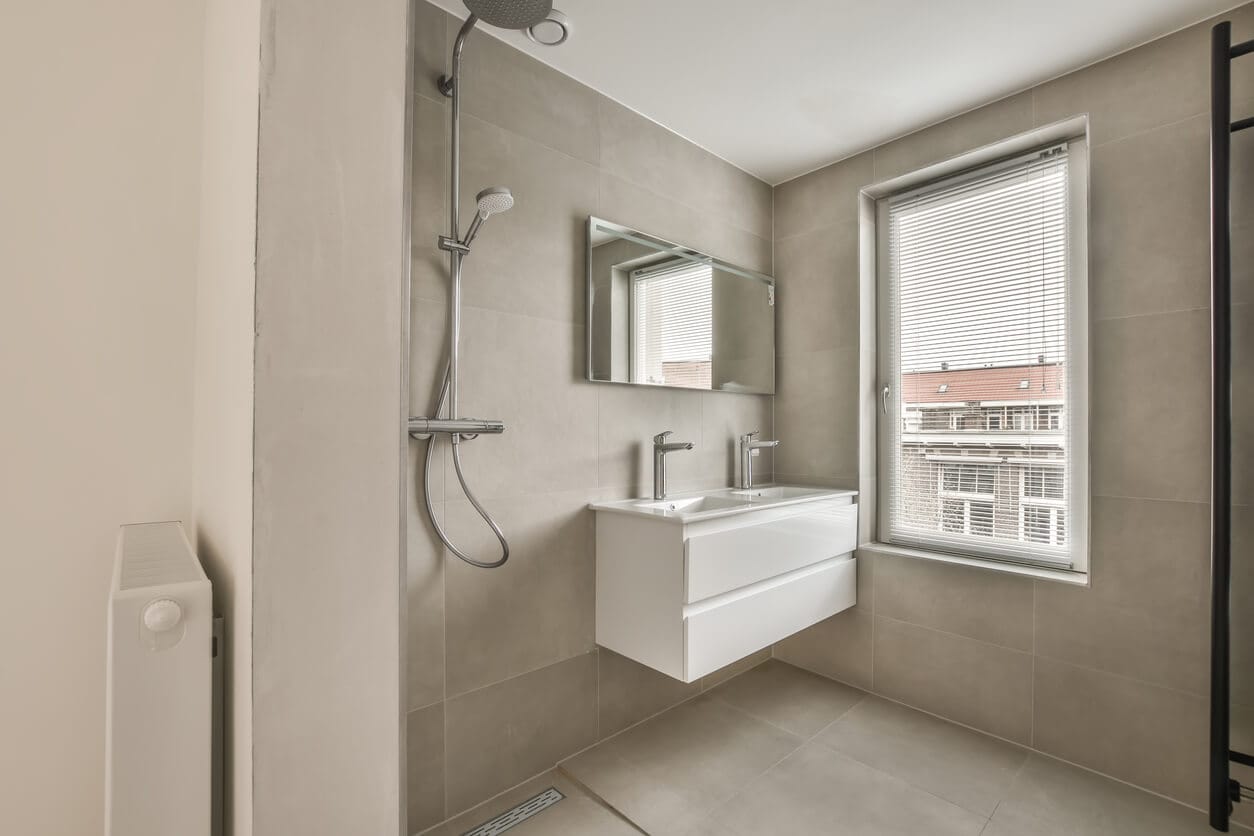
A wet room bathroom is a fully waterproofed bathroom where the shower area is open or only partially enclosed, allowing water to drain directly through the floor rather than being contained inside a traditional shower stall. Instead of separating the shower with a raised curb or bulky enclosure, a wet room uses careful floor sloping, drainage, waterproofing, and layout planning to create a cleaner, more open design.
Wet rooms have been popular in Europe and Japan for years, and they are becoming more common in California homes because they offer a modern look, easier accessibility, and more flexibility in smaller bathroom layouts. They can work beautifully in both luxury bathrooms and compact spaces, but they need to be designed correctly from the start. If you are considering a bathroom remodel in San Jose or the Bay Area, a wet room can be an elegant solution—but it is not the right fit for every home or budget.
How a Wet Room Bathroom Works
A wet room is more than just a shower without a door. The entire room, or at least the main bathing zone, must be built to handle regular water exposure.
A properly built wet room usually includes:
- a fully waterproofed floor and lower wall system
- a sloped subfloor that directs water to a central or linear drain
- slip-resistant tile or flooring
- moisture-resistant wall materials
- strong ventilation to control humidity
- a layout that keeps the toilet and vanity protected from overspray
In some designs, the entire bathroom acts as the wet zone. In others, only one side of the bathroom is treated as the open wet area, often divided with a glass panel.
Pros of a Wet Room Bathroom

Cons of a Wet Room Bathroom
How Much Does a Wet Room Bathroom Cost?
The cost of a wet room bathroom depends on the size of the space, the condition of the subfloor, the drain system, the tile selection, and whether plumbing needs to be moved.
In California, a wet room remodel often costs more than a standard shower remodel because of the waterproofing and drainage work involved.
Typical cost drivers include:
- demolition and prep work
- waterproof membrane installation
- floor leveling and sloping
- linear or center drain installation
- premium tile and grout materials
- custom glass panels
- plumbing relocation
- ventilation upgrades
- heated flooring or luxury finishes
For many homeowners, the added cost is worth it because the final result looks more custom, feels more spacious, and improves long-term accessibility.
Drainage and Waterproofing: The Most Important Part
If you remember one thing about wet rooms, remember this: the success of the project depends on drainage and waterproofing.
A wet room cannot rely on appearance alone. It needs a properly engineered system underneath the tile.
Wet room drainage
The bathroom floor must slope toward the drain so water flows away efficiently. This can be done with a center drain or a linear drain, depending on the design and layout.
Wet room waterproofing
The subfloor, lower walls, corners, seams, and penetrations all need to be sealed with a professional waterproofing system. Tile and grout alone are not enough to stop moisture intrusion.
Ventilation
Because wet rooms expose more of the bathroom to steam and moisture, ventilation is critical. A quality exhaust fan helps reduce humidity, protect materials, and prevent mold issues over time.
This is why wet rooms should be installed by experienced bathroom remodelers—not treated like a basic tile job.
Wet Room Bathroom Layout Tips
A successful wet room bathroom layout balances openness with practicality.
Some smart design choices include:
- placing the drain where water naturally flows
- using a glass divider to reduce splash without closing off the room
- keeping the vanity outside the main spray zone
- selecting slip-resistant floor tile
- using recessed niches instead of bulky shelving
- choosing wall-mounted fixtures to keep the room feeling open
In smaller bathrooms, layout matters even more. A well-planned wet room can make the space feel bigger. A poorly planned one can make it feel constantly wet and inconvenient.
California Remodeling Considerations
If you are building a wet room bathroom in California, local code compliance and moisture control matter even more than aesthetics.
Before moving forward, consider:
- permit requirements for plumbing or layout changes
- waterproofing standards for tiled wet areas
- slip resistance and safety
- adequate ventilation
- accessibility goals for long-term use
- material durability for heavy moisture exposure
For homeowners in San Jose and the Bay Area, working with a contractor who understands local remodeling requirements can save time, stress, and costly corrections. The goal is not just to create a bathroom that looks beautiful on day one, but one that performs well for years without drainage issues, moisture damage, or safety concerns.
Is a Wet Room Bathroom Right for Your Home?
A wet room bathroom is a strong choice if you want a space that feels modern, open, and easier to access. It is especially attractive for homeowners planning a luxury remodel, a small bathroom redesign, or an aging-in-place upgrade.
But it only works well when the construction quality is high. Drainage, waterproofing, tile selection, and layout planning all need to be right.
If you are thinking about adding a wet room to your remodel, the smartest move is to evaluate the space, your goals, and your budget before demolition begins.
Planning a Wet Room Bathroom Remodel in San Jose?
At Top Home Builders, we design and build bathrooms that are functional, stylish, and built to last. Whether you want a modern wet room, a curbless shower, or a complete bathroom remodel in San Jose, our team can help you plan the layout, waterproofing, finishes, and construction the right way.
If you are exploring ideas for your bathroom, start with our bathroom remodeling services or contact us to discuss your project.
Related Article: Top Luxury Features for Homes in 2025